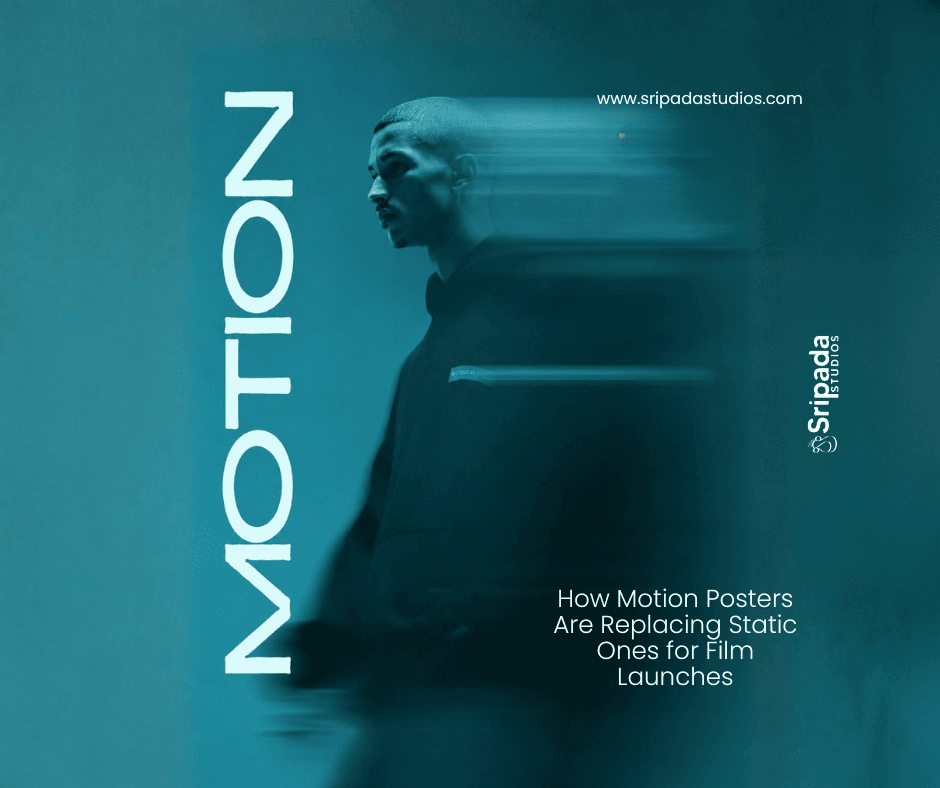
There used to be a single image that carried the entire weight of a film's first impression — the poster. One frame, one tagline, one shot at making a stranger scrolling past stop and look twice. That image still matters, but it's no longer alone in doing that job. Somewhere in the last few years, that single frame started to move — a few seconds of animation, a flicker of light, a character's eyes shifting toward the camera — and audiences started expecting it to.
The Static Poster Was Never Really About Standing Still
A film poster was always meant to feel alive, even when it couldn't actually move. That's why posters leaned so hard on dramatic lighting, mid-action poses, and title treatments that looked like they were about to burst off the page — the entire craft was built around suggesting motion within a single frozen frame.
Motion posters didn't replace that instinct. They just gave it what it always wanted. A character's cape doesn't have to look like it's caught mid-flutter anymore — it can actually flutter. A dramatic gaze doesn't have to be captured at the one perfect angle — it can hold, blink, and shift, the way it would if you were actually standing in front of that person.
Why This Shift Happened Now
The feed doesn't reward stillness. A static image competing for attention on Instagram or Twitter is sitting next to videos, reels, and other motion content on every side. A poster that moves, even subtly, catches a scrolling thumb in a way a still image increasingly can't.
Motion posters do double duty. A single motion poster can be cut into a teaser-length clip, a looping Instagram post, a WhatsApp status share, and a YouTube thumbnail — all from one asset. A static poster mostly just sits there as one image, with far less to repurpose.
They bridge the gap between poster and teaser. A first-look poster used to be the only visual audiences got before the teaser dropped weeks later. A motion poster fills that gap — it gives just enough movement to feel like a preview, without giving away as much as an actual teaser would.
Production has gotten more accessible. What once required significant VFX budget — subtle animation, parallax effects, particle work — can now be done by a small motion design team without needing a full visual effects house. That's brought motion posters within reach of far more productions, not just big-budget releases.
What Makes a Motion Poster Actually Work
Not every animated poster earns its motion — plenty just add movement for the sake of it, and end up feeling more like a gimmick than a genuine first look.
Restraint matters more than spectacle. The posters that land well usually move just enough to feel alive — a slow zoom, a flicker of light, fabric caught in wind — rather than throwing in every animation effect available. Overdoing the motion tends to distract from the image instead of enhancing it.
The loop has to feel intentional. Since most motion posters are built to loop on social feeds, the animation needs a natural point to return to. A poster that jars or jumps at the loop point breaks the illusion it worked to build in the first three seconds.
Sound is optional, but it changes everything when it's there. A subtle score sting or an ambient sound layered under a motion poster can add a mood a static image simply can't carry — though it also means the poster has to work even when a viewer has their sound off, which is most of the time on social feeds.
It still has to work as a single frame. However good the motion looks, the first frame a viewer sees before it starts moving still has to hold up as a poster in its own right — because for a fraction of a second, before the motion kicks in, that's exactly what it is.
What This Means for a Film Launch
Motion posters haven't retired the static poster — theatres, print, and merchandise still need a still image that works. But as a first-look and social-first asset, motion has become the format audiences expect rather than the exception. A film's first reveal increasingly isn't a single image anymore; it's a few seconds of one, timed and paced the same way a teaser would be.
For a film hoping to make a real first impression today, the question isn't whether the poster should move. It's how much restraint that movement needs to actually make people stop scrolling.